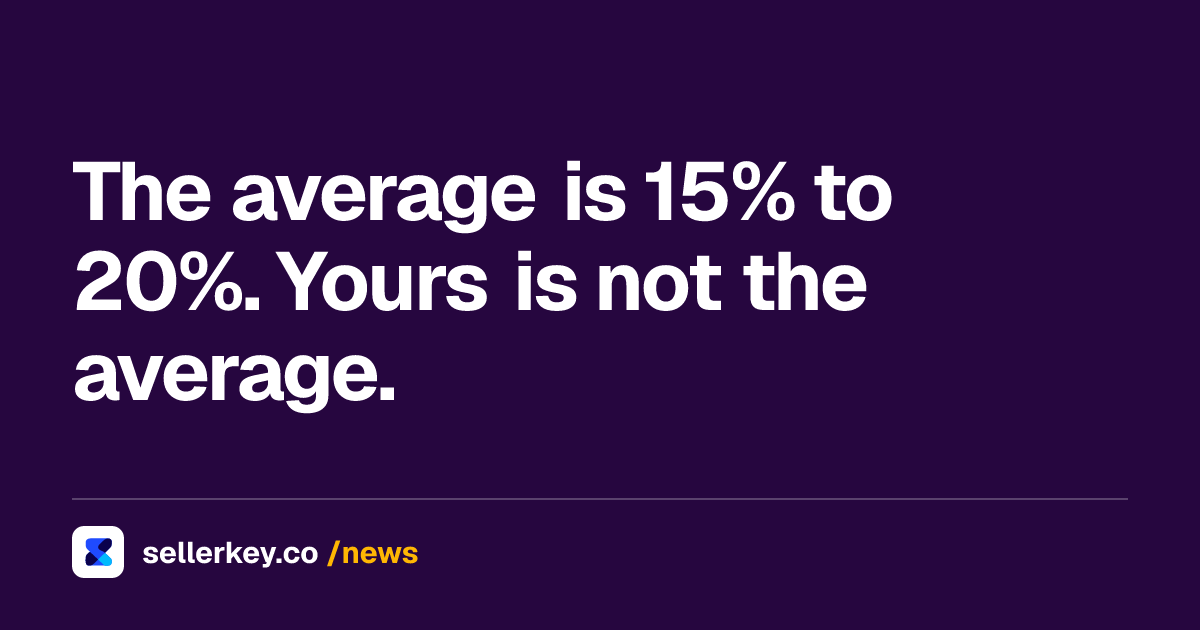
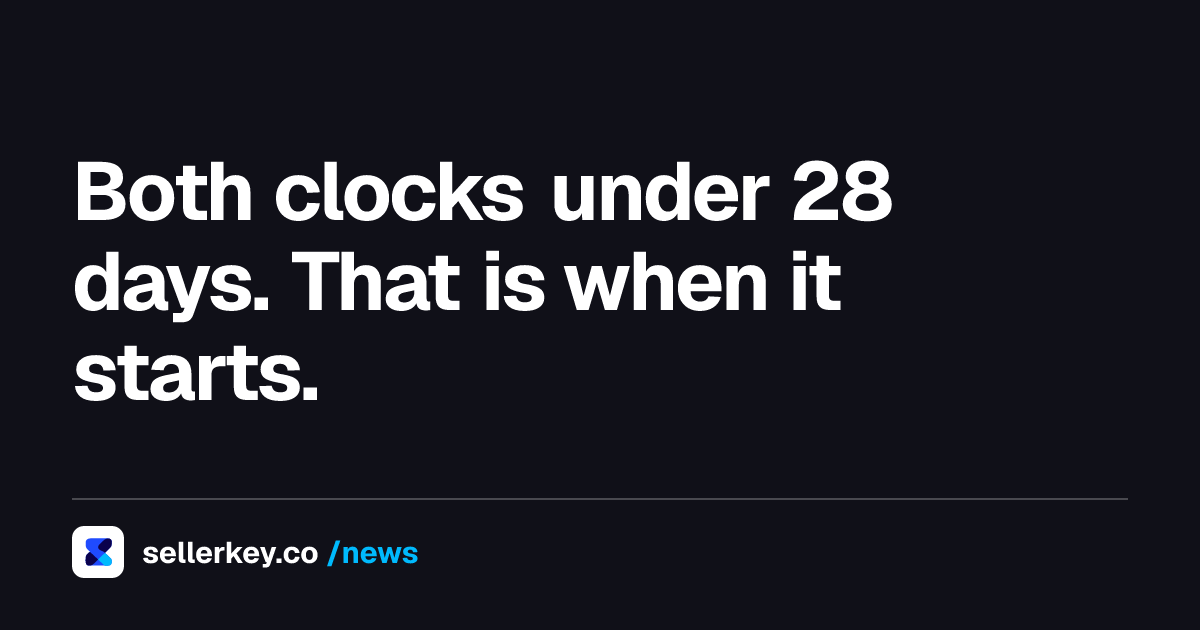
28 days
minimum days of supply threshold for low inventory fee since April 1, 2024
30 days
short-term rolling average window for inventory calculation
90 days
long-term rolling average window for inventory calculation
Key takeaways
- Amazon charges low inventory fees if both 30- and 90-day average supply fall below 28 days.
- The fee applies at the parent-product level, not per child ASIN, affecting all variations.
- The fee has been active since April 1, 2024, with no grace period after May 2024.
- Inbound delays reduce your days of supply credit, causing fees even if stock is in receiving.
- New sellers and new-to-FBA products have exemptions for 365 and 180 days respectively.
You open the FBA Inventory page, you can see units sitting in receiving, and the charge lands anyway. Why am I being charged a low inventory level fee when the stock is already inside the network is the fairest question in Seller Central, and the answer is that the fee is not looking at what you have today. It is looking at two rolling averages, and one of them goes back three months.
What the low inventory level fee actually measures
Amazon assesses the fee on a product's historical days of supply, calculated two ways at once: a short-term window over the last 30 days and a long-term window over the last 90 days. In the Seller Forums, Amazon staff state the rule plainly: the fee is only assessed if both metrics are below 28 days.
Two details do most of the damage:
- The metric is calculated at the parent-product level, not per child ASIN. One fast-moving variation can pull the whole parent under the line.
- It is an average of inventory against sales across the window, not a snapshot. Restocking today does not undo the last 90 days.
The fee has applied since April 1, 2024. Amazon credited back every low-inventory-level fee charged during that first month, and announced the end of that credit from May 2024 onward. There has been no grace period since.
Why the fee lands while your stock is in receiving
This is the part that feels wrong, and it is worth separating what Amazon confirms from what sellers observe.
Amazon's own position, given by staff in the forums, is that the fee weighs the 90-day window, so "a minor inbound delay is not likely to affect your long-term historical days of supply metric". In the same thread, sellers report something narrower: that the calculation counts available units plus units in FC transfer, and not everything Amazon physically holds. That second part is not confirmed by Amazon and should be treated as a seller observation, not a rule.
What matters operationally is the same either way. A shipment that takes three weeks to be received is three weeks of days-of-supply you never get credit for, and the 90-day window keeps remembering it long after the units go live.
The exemptions worth checking before you dispute
Before you open a case, check whether the SKU should have been charged at all. Amazon lists the exemptions in the same staff explanation:
- New professional sellers, for their first 365 days.
- New-to-FBA parent products, for their first 180 days, when enrolled in FBA New Selection.
- Products auto-replenished by Amazon Warehousing and Distribution.
Step by step: check the charge, then dispute it
- Open the FBA Inventory page in Seller Central and add the Historical days of supply columns. You need both the short-term and long-term figures for the parent product, not the child.
- Pull the SKU Economics report. This is where the fee shows up per SKU and per period. Amazon points sellers here rather than to the fulfillment fee line, because the charge is folded in and is not obvious on an invoice.
- Line up the receive dates. Export the shipment and note the delivery date against the date the units became fulfillable. That gap is your evidence.
- Check whether Amazon caused the delay. Amazon has stated in the forums that "we will proactively reimburse sellers if the low-inventory-level fees are charged due to excessive inbound delays where Amazon or Amazon-managed services are the reason for the delay". Proactively means you should not have to ask. In practice, sellers in that thread report the credit did not arrive on its own.
- If the credit never came, file a case with the SKU Economics export, the shipment ID, the delivery date and the receive date. Ask specifically for the inbound-delay reimbursement rather than a general fee review.
How to stop it repeating in Q4
The 90-day window is the planning point. Inventory you send in October is still shaping the long-term metric in January, which is exactly when the peak fulfillment fees run through January 14 and when monthly storage rates are at their highest. A fee stacked on top of those is the difference between a thin Q4 and a negative one.
Three habits that hold up:
- Reconcile SKU Economics monthly, not quarterly. The dispute is easy while the shipment is fresh and hard once the receive record is a quarter old.
- Watch the parent, not the child. Track the parent-level days of supply for anything close to 28.
- Treat slow receiving as a cost line. If a shipment is sitting undelivered or unreceived, it is already costing you, the same way a shipment that closes with missing units does.
SellerKey reads your FBA and fee data and surfaces the charge next to the SKU it came from, so a low-inventory-level fee shows up as a number you can act on instead of a line buried in fulfillment. It reports; it does not change anything in your account.
Sources
- Amazon Seller Forums - Low-inventory-level fee further explained (Bryce_Amazon) sellercentral.amazon.com
- Amazon Seller Forums - Low Inventory Level Fees continuing to be charged despite slow logistics (NR_Amazon) sellercentral.amazon.com
- Amazon Seller Forums - Update: Credit for FBA low-inventory-level fees incurred during April 2024 sellercentral.amazon.com
- Amazon Seller Forums - Days of Supply: does this include inventory on hand + inbound? (Dominic_Amazon) sellercentral.amazon.com
- Sellers Ask Sellers - Low Inventory Level Fee, The Hypocracy sellersasksellers.com

Hey! We're the SellerKey Team
Data & product at SellerKey.co
📊 We build SellerKey.
The team behind SellerKey. We write about fees, margin, inventory and ads for Amazon sellers.