$2.40
Standard-size storage cost per cubic foot from October 1
0.56
Oversize storage cost per cubic foot before October 1
181 days
Days on hand when aged inventory surcharge applies
Key takeaways
- Amazon FBA standard-size storage fees jump from $0.78 to $2.40 per cubic foot starting October 1.
- Peak fulfillment fees begin two weeks later, on October 15, creating two distinct Q4 fee windows.
- Aged inventory surcharge starts after 181 days and can add several dollars per cubic foot monthly.
- Storage utilization surcharge penalizes sellers holding more inventory volume than their sales justify.
- Removal orders created late in September do not reduce October storage fees due to billing on average daily volume.
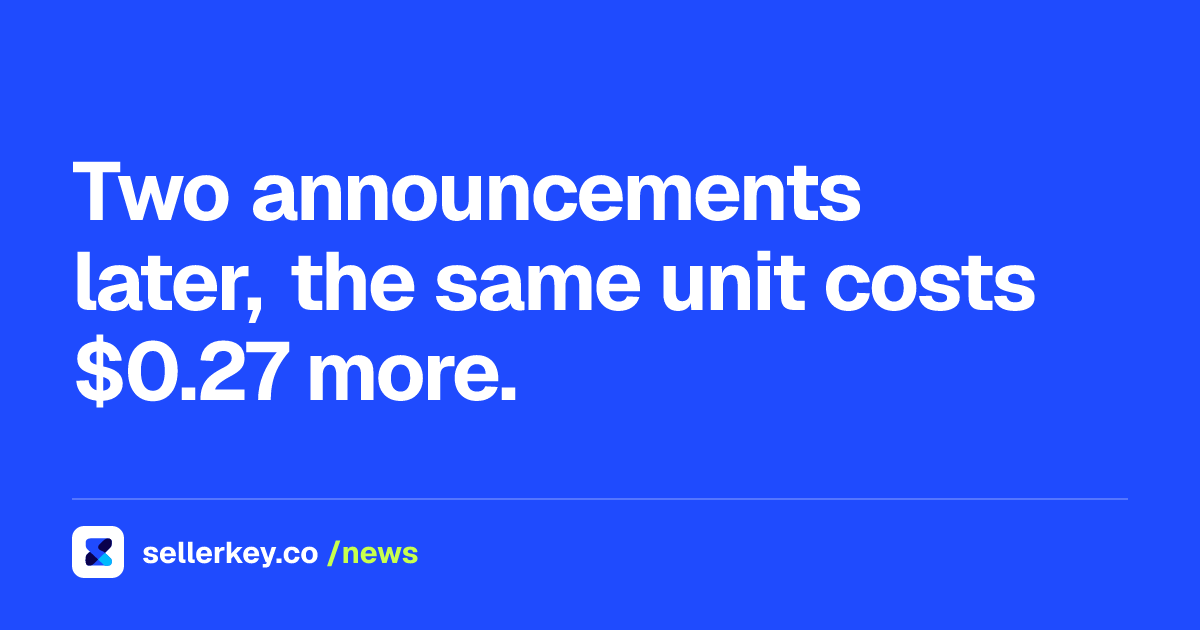
Amazon FBA storage cost in Q4 changes on October 1, and it is a different fee on a different calendar from the peak fulfillment fees that start two weeks later. Standard-size storage goes from 0.78 to 2.40 dollars per cubic foot. Oversize goes from 0.56 to 1.40. Nothing about your inventory changes on October 1 except what it costs to keep it there.
What the peak storage window actually costs
Monthly storage is billed on the average daily volume you hold, so the October charge is decided by what sits in the fulfillment center all month, and it lands on the November statement.
A worked example using the published rates. A thousand standard-size units at 0.1 cubic feet each is 100 cubic feet. Through September that is 78 dollars a month. From October it is 240. Across the quarter, 234 dollars becomes 720. The difference is 486 dollars on inventory that has not moved and may not move.
That is per hundred cubic feet. Scale it to your own cube and it stops being abstract.
Why the two Q4 fee windows do not line up
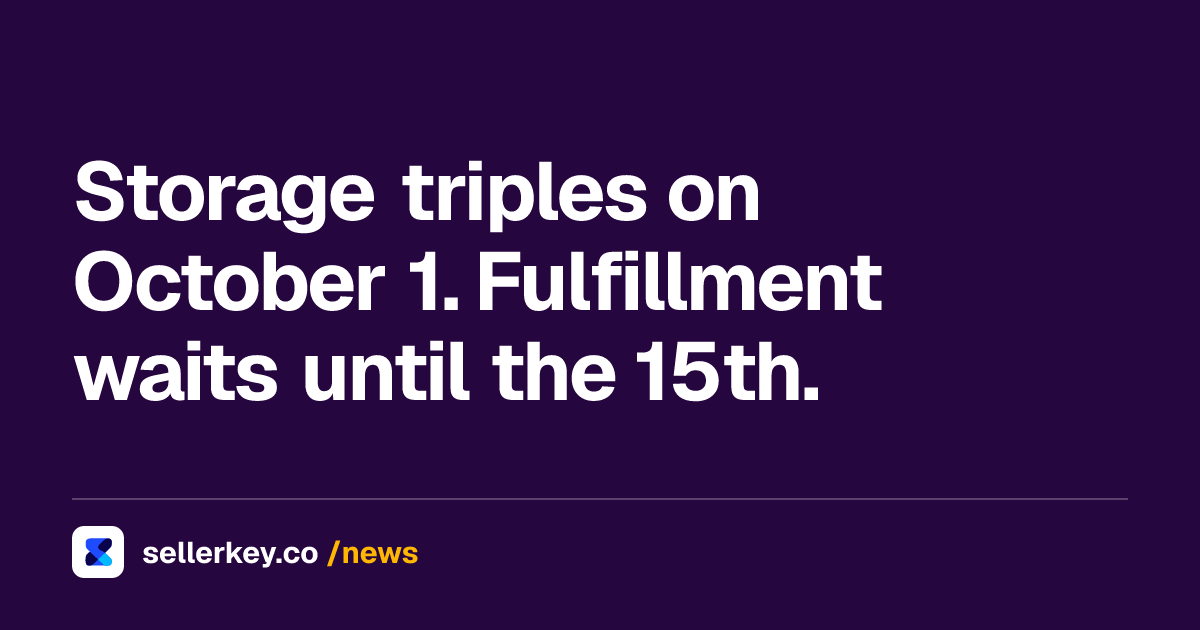
This is the part that breaks Q4 models. Peak fulfillment fees run October 15 to January 14. Peak storage runs October 1 to December 31. Two windows, four dates, no overlap at either end.
- October 1 to 14. Peak storage is live, peak fulfillment is not. What you pay to hold a unit rises before what you pay to ship it does.
- January 1 to 14. Storage has reset to the off-peak rate, fulfillment has not. Units sold in the first two weeks of January ship at the peak rate.
On top of both sits the 3.5 percent fuel and logistics surcharge, which applies to the fulfillment fee and has no published end date, and for anyone shipping with Amazon Shipping, its own demand surcharges on a third calendar.

The surcharges that stack on top of storage
Peak storage is the base rate, not the ceiling. Two more charges can hit the same unit in the same month:
- Aged inventory surcharge. Applies from 181 days on hand, assessed monthly, and escalates by age band from 0.50 dollars per cubic foot into the high single digits for inventory more than a year old.
- Storage utilization surcharge. Applies to professional sellers holding far more cover than their sell-through supports, and it is charged on total stored volume, not only on the excess.
A slow, overstocked, aged ASIN can be paying peak storage, the aged surcharge and the utilization surcharge at once, in the quarter when warehouse space costs the most.
What to decide before October 1
The decision is not about Q4 sales. It is about which units should not be in a fulfillment center during Q4 at all.
- Rank your ASINs by cubic feet held, not by unit count. Storage is billed on volume, and the worst offenders are usually bulky and slow.
- For anything holding more cover than the quarter can sell, choose now between a removal order, a liquidation, or paying the higher rate with your eyes open.
- Check days on hand against the 181 day line. A unit that crosses it during Q4 picks up the aged surcharge on top of everything else.
- Create removal orders with lead time. Removals take time to process, and one created on September 30 does not take volume out of the October average.
Amazon publishes its current rates in the 2026 US referral and FBA fee changes summary and the 2026 US FBA fulfillment fee changes, and confirmed in its 2026 fee announcement that no new FBA fee types were introduced this year. The figures above come from trade coverage of those schedules, so check the rate card in your own account before acting on the arithmetic.
Sources
- Amazon Selling Partners - 2026 Update to US Referral and FBA Fees sellingpartners.aboutamazon.com
- Amazon Seller Central - 2026 US referral and FBA fee changes summary (no verificable sin login) sellercentral.amazon.com
- InventoryHero - Amazon Q4 2026 FBA Fees: The Two Windows Do Not Line Up inventoryhero.ai
- ConversionPerk - Amazon FBA Storage Fees 2026: Monthly, Aged and Q4 Peak Rates conversionperk.com
- EcomCalcTools - Amazon FBA Storage Fees 2026 ecomcalctools.com

Hey! We're the SellerKey Team
Data & product at SellerKey.co
📊 We build SellerKey.
The team behind SellerKey. We write about fees, margin, inventory and ads for Amazon sellers.