3.5%
Fuel and logistics surcharge rate since April 17, 2026
$0.17
Average surcharge per unit for US FBA items
0.32
Average holiday peak fulfillment fee increase per unit from Oct 15, 2026
Key takeaways
- The Amazon FBA fuel and logistics surcharge is 3.5% of your fulfillment fee, averaging about $0.17 per unit in the US.
- Holiday peak fulfillment fees start October 15, 2026, increasing fees by roughly $0.32 per unit until January 14, 2027.
- The surcharge applies on top of the peak fees, adding about $0.01 more per unit during Q4 peak season.
- Oversize units with higher fulfillment fees pay proportionally more surcharge, up to $0.42 per unit.
- The surcharge has been active since April 17, 2026, and has no announced end date, effectively making it a permanent cost.
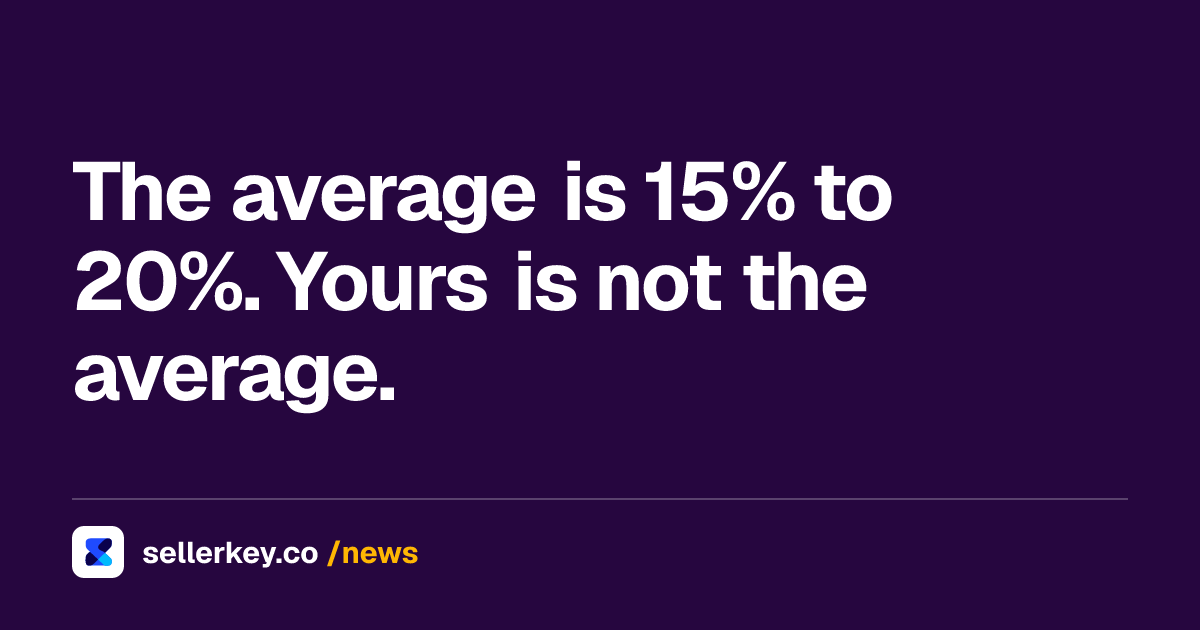
The Amazon FBA fuel and logistics surcharge is 3.5 percent of your fulfillment fee. Because it is a percentage and not a flat amount, it grows every time the fee underneath it grows. Holiday peak fulfillment fees start on October 15, 2026. The surcharge rate will not move that day. The amount it takes out of each unit will.
What the fuel and logistics surcharge is
Amazon set it out in the Seller Central announcement Fuel and logistics-related surcharge: FBA, MCF, and BWP in US and CA: 3.5 percent applied to fulfillment fees, working out to roughly 0.17 dollars per unit on average for US FBA, varying by item size.
The effective dates split by program:
- April 17, 2026 - FBA in the US and Canada, and Remote Fulfillment with FBA from the US to Canada, Mexico and Brazil.
- May 2, 2026 - Buy with Prime in the US, and Multi-Channel Fulfillment in the US and Canada.
Amazon describes these as temporary surcharges, applied to recover part of the cost increases it is absorbing. The announcement publishes no end date.
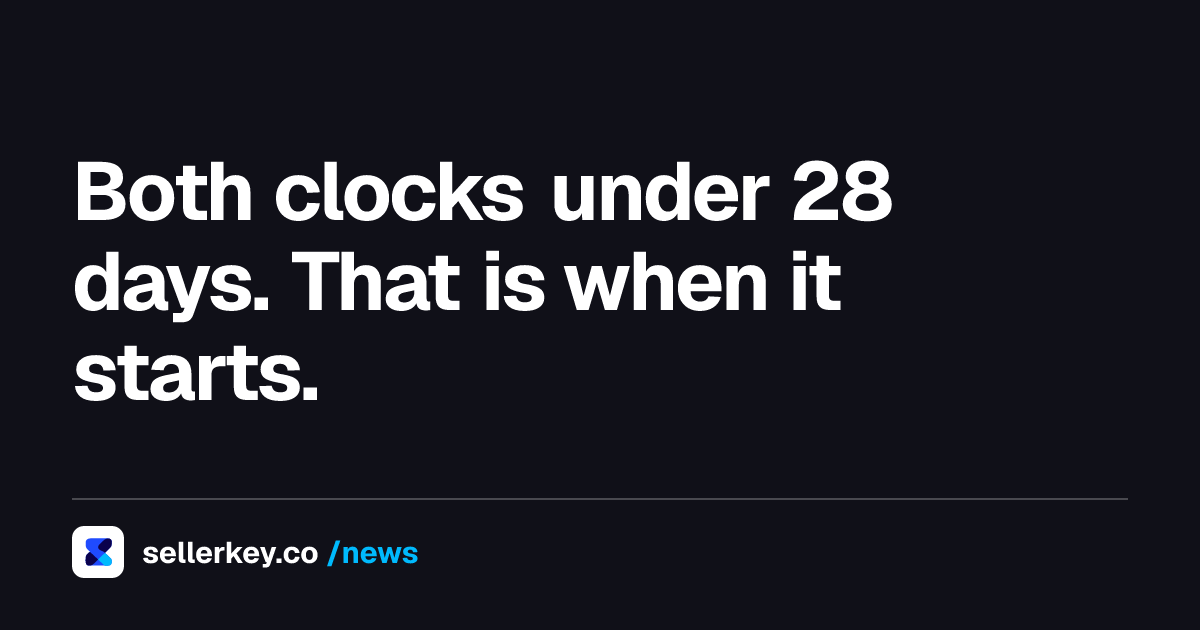
That detail matters more than the percentage does. A temporary surcharge with no published end date has to be modeled as a standing cost rather than a blip. It has been on every US FBA unit since April 17, which is roughly five months of shipped units already carrying it.
How the surcharge stacks with holiday peak fulfillment fees
Amazon confirmed in Holiday 2026: Same fees, same eligibility, earlier deadlines that holiday peak fulfillment fees apply from October 15, 2026 to January 14, 2027, with the same per unit increase over non-peak rates as last year, averaging 0.32 dollars per unit.
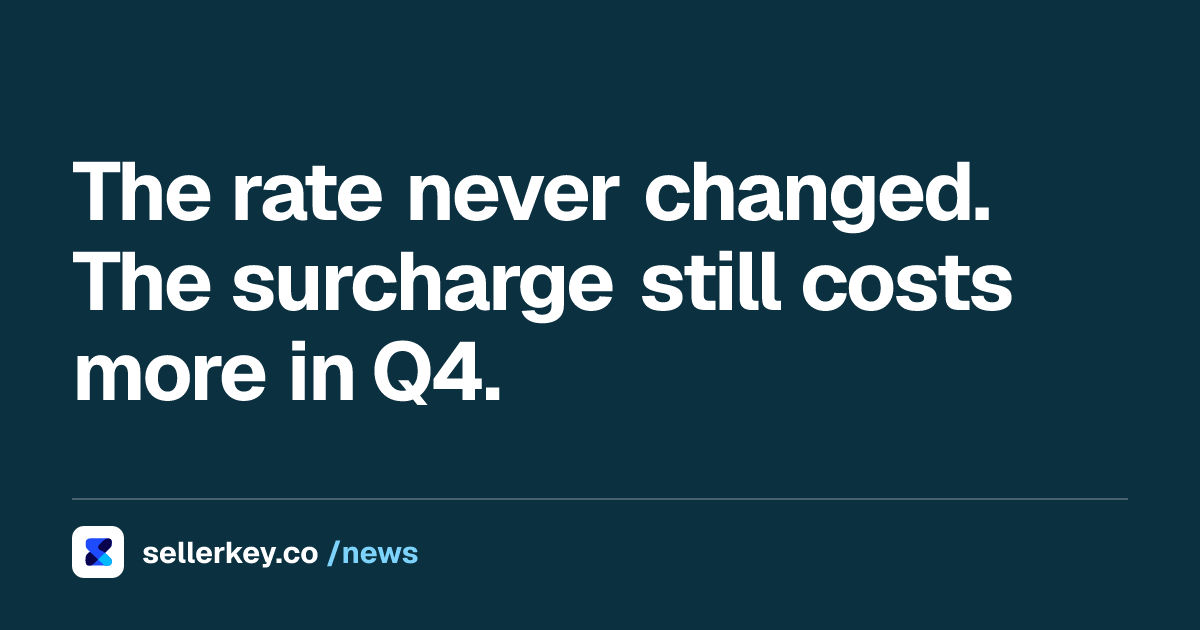
Those two numbers compound rather than add. The surcharge is charged on the fulfillment fee, and during peak the fulfillment fee is higher, so the surcharge on the peak increment alone works out to about 0.01 dollars per unit. That is 3.5 percent of 0.32.
One cent. Written down plainly it is almost nothing per unit, and this article is not going to pretend otherwise.
The mechanism is the part worth keeping. Any future change to the 2026 US FBA fulfillment fee rates now arrives with 3.5 percent already attached. You no longer absorb a fee increase at face value. You absorb it at 103.5 percent of face value, for as long as the surcharge stands.
Run the arithmetic on your own volume
Averages are the wrong unit here. The surcharge is proportional to your fulfillment fee, and your fulfillment fee depends on size tier and weight. A small standard unit pays a bit over a cent. An oversize unit with a 12 dollar fulfillment fee pays 0.42 dollars per unit, on every unit, all year.
Do it on your own numbers, in this order:
- Take the fulfillment fee for each of your top SKUs from the fee preview, not from an average.
- Multiply by 0.035. That is the surcharge per unit today.
- For the October 15 to January 14 window, redo step one with the peak fee and repeat.
- Multiply by the units you actually expect to move in that window, not by an average month.
Step four is where the number stops being small. This is a per unit cost, and Q4 is when you move the most units. Nothing about the rate changes; the base it applies to changes, and so does how many times you apply it.
What to check before October 15
- Reprice against the peak fee plus surcharge, not the standard fee. If your margin floor was set in March, it was set before April 17 and it is off by 3.5 percent of your fulfillment fee.
- Check Multi-Channel Fulfillment separately. MCF and Buy with Prime picked the surcharge up on May 2, and MCF pricing gets reviewed far less often than FBA pricing does.
- Check Remote Fulfillment. If you sell into Canada, Mexico or Brazil out of US inventory, those units carry it too.
- Watch the deadlines as well as the rates. The holiday peak fulfillment fee calendar for 2026 and the peak deadline that costs more than the surcharge cover the dates that decide whether your units are even in the network in time.
- Price your own-ship channel too. Amazon Shipping added a demand surcharge covering broadly the same weeks, so moving volume off FBA does not move you out of surcharge season.
Independent coverage at the time, including Supply Chain Dive, noted that carrier surcharges introduced as temporary have a habit of staying. Amazon has not said either way. Planning for it to stay costs you nothing if it goes.
SellerKey pulls your fee data through the SP-API and reports what each unit actually costs by ASIN, so a percentage surcharge and a seasonal fee change do not have to be reconciled by hand in a spreadsheet every quarter. It reports. It does not change your prices or your listings on Amazon.
Sources
- Amazon Seller Central - Fuel and logistics-related surcharge: FBA, MCF, and BWP in US and CA sellercentral.amazon.com
- Amazon Seller Central - Holiday 2026: Same fees, same eligibility, earlier deadlines sellercentral.amazon.com
- Amazon Seller Central - 2026 US FBA fulfillment fee changes sellercentral.amazon.com
- Supply Chain Dive - Amazon to apply 3.5% fuel and logistics surcharge on fulfillment supplychaindive.com

Hey! I'm Amara
Press at SellerKey.co
☕ Espresso. Never a latte macchiato.
I cover Amazon fee and policy changes: what changed, when it applies and where Amazon published it.